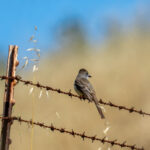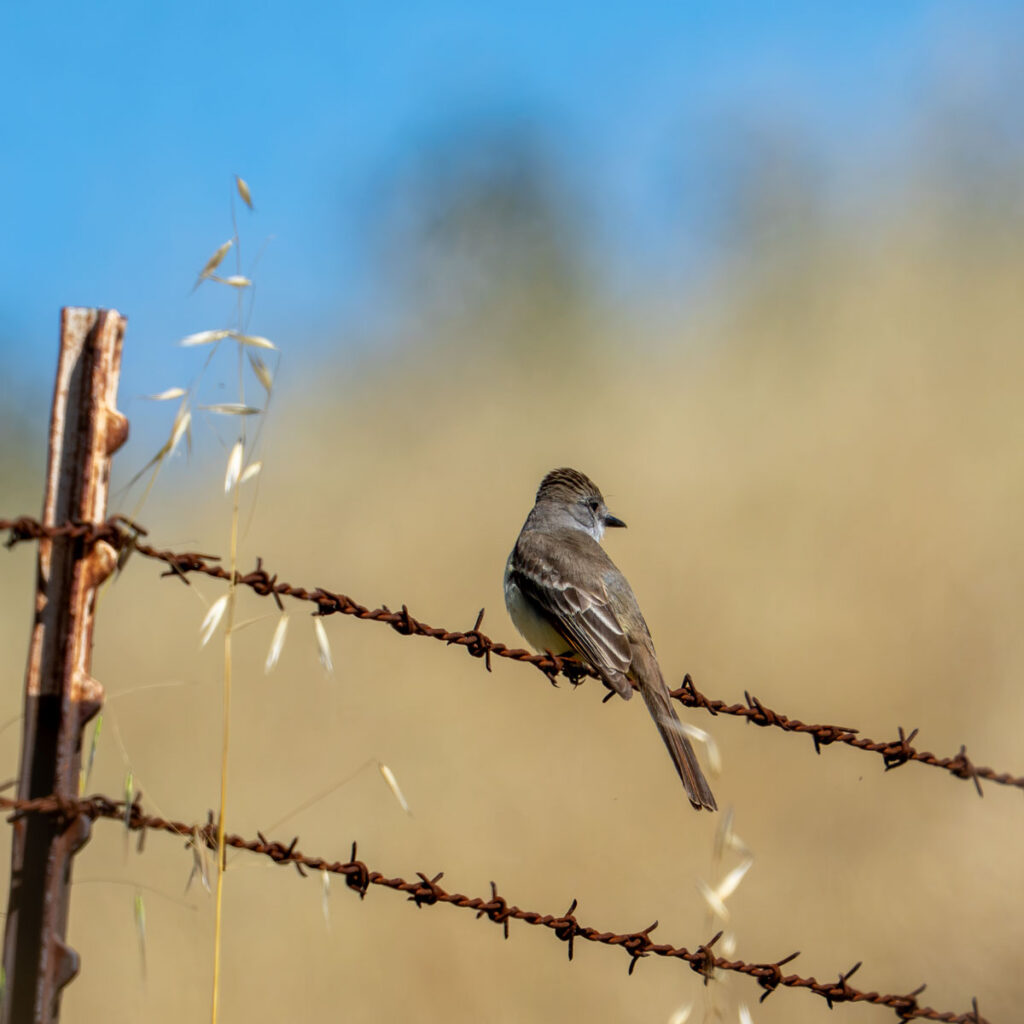
Ash-throated flycatchers are a summer visitor to the Santa Cruz Mountains. While they can be easy to overlook at first, their distinctive throaty call often reveals their presence.
Although not as colorful as some of California’s songbirds, ash-throated flycatchers are a characteristic bird of the region’s oak woodlands and grasslands. More often than not, the first clue that one is nearby is a call coming from somewhere among the oaks. Researchers studying ash-throated flycatchers and closely related species found vocalizations to be one of the most useful characteristics for distinguishing them in the field.
About the ash-throated flycatcher
Ash-throated flycatchers are a summer resident of the Santa Cruz Mountains. They arrive in spring to breed and raise young before migrating south to Mexico and Central America for the winter.
Ash-throated flycatchers hunt insects from elevated perches. Other flycatchers like black phoebes and Say’s phoebes often return to the same perch after catching an insect, but ash-throated flycatchers tend to move from perch to perch while foraging.
Ash-throated flycatchers are also well adapted to dry environments. They can obtain most or all of the water they need from the insects they eat, allowing them to thrive in habitats where standing water may be scarce.
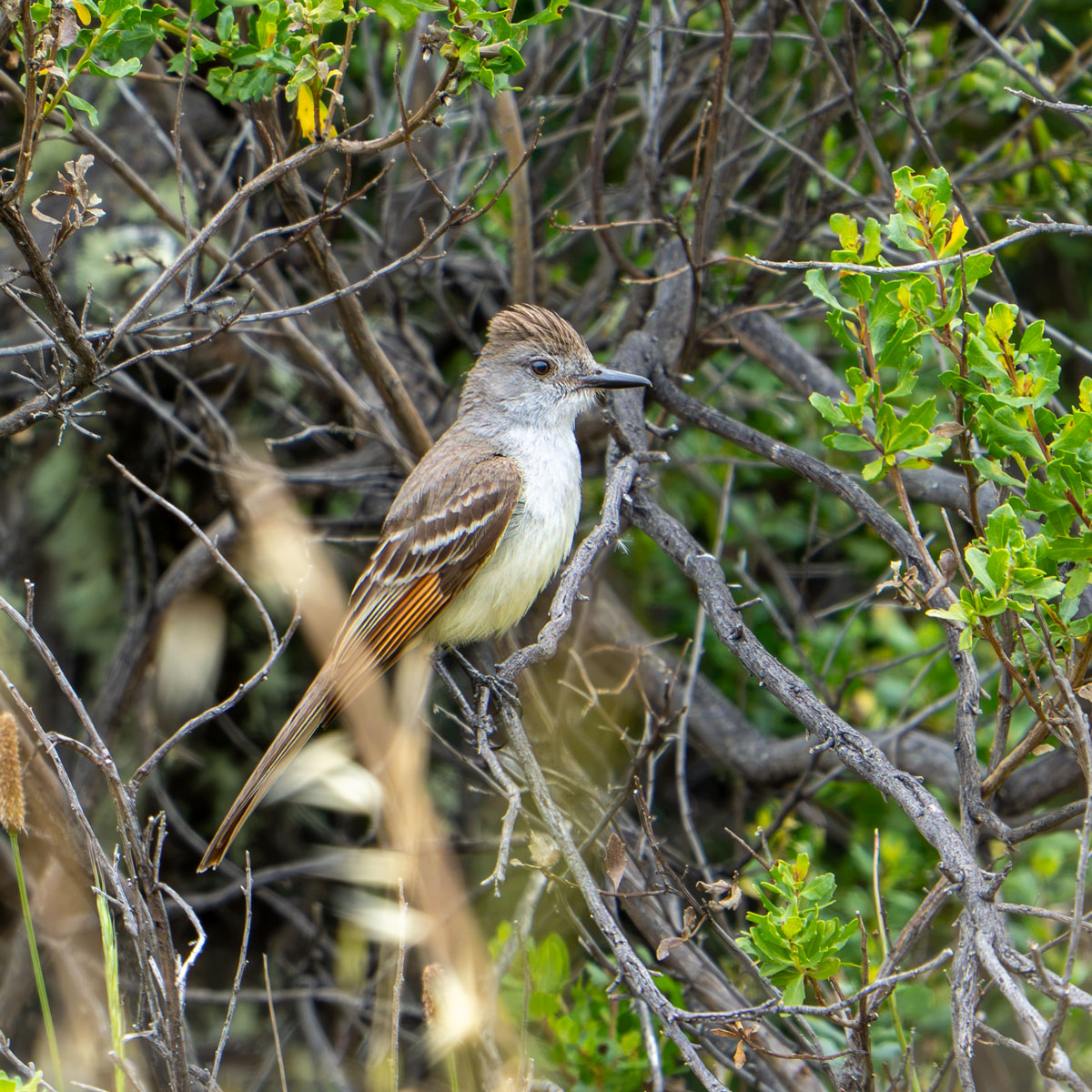
Their gray head, pale underparts, and warm cinnamon-colored highlights in the tail help them blend into the dry summer landscape. While they are often easier to hear than see, a patient scan of nearby trees will often reveal the bird perched in the open.
Unlike woodpeckers, ash-throated flycatchers cannot excavate their own nest cavities. Instead, they rely on existing holes in trees, including abandoned woodpecker cavities and natural hollows. Mature trees and standing dead trees provide important nesting sites during the breeding season.
Where to find ash-throated flycatchers
In the Santa Cruz Mountains, ash-throated flycatchers are most often found where open grasslands meet scattered oaks. These areas provide the combination of open hunting grounds and oak woodland habitat favored by the species.
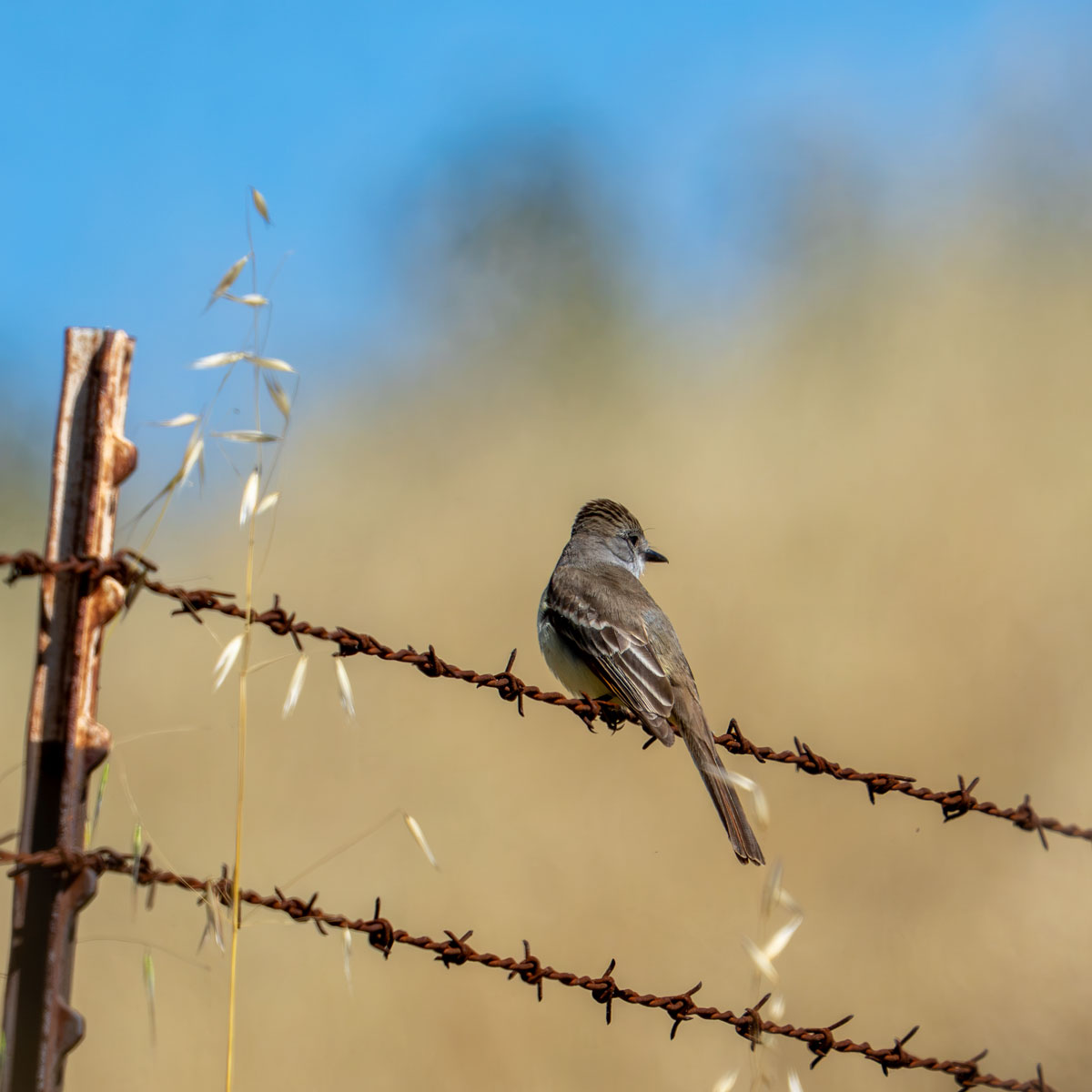
Good places to look include the Skid Road Trail at Monte Bello Open Space Preserve, the grasslands near Arrowhead Loop Trail in Coyote Valley Open Space Preserve, and the lower elevations of Bear Creek Redwoods Open Space Preserve.
For hikers exploring these preserves during spring and summer, listening first for the bird’s distinctive call is often the easiest way to locate one nearby.
References
Lanyon, W. E. 1961. Specific Limits and Distribution of Ash-throated and Nutting Flycatchers. Condor 63(6): 421–449.
Cornell Lab of Ornithology. All About Birds: Ash-throated Flycatcher. Available at: https://www.allaboutbirds.org/guide/Ash-throated_Flycatcher/overview