A member of the lily family, the California fetid adderstongue (Scoliopus bigelovii) gets its name from the foul smell the plant emits in order to attract pollinating fungus gnats.
February is an ideal time to look for these native redwood forest understory plants, when their distinctive flowers are in bloom. California fetid adderstongues are native lillies found in the Santa Cruz Mountains and North Coast Ranges. One of the easiest spots to see them is near the lower entrance to Thornewood Open Space Preserve in the Santa Cruz Mountains.
A redwoods understory plant
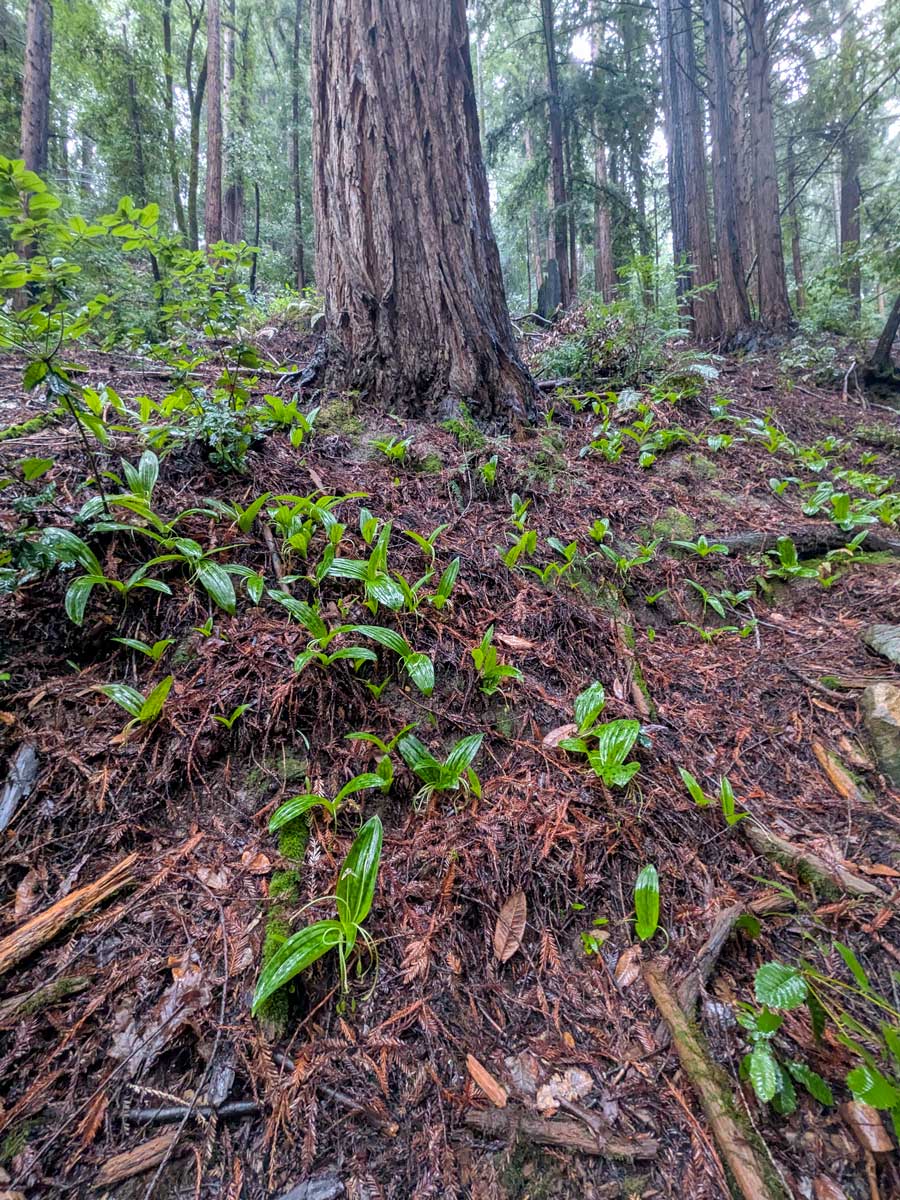
At Thornewood Open Space Preserve, small clusters of adderstongue grow near the Bridle Trailhead in areas where dense canopy cover maintains cool temperatures and moist soil.
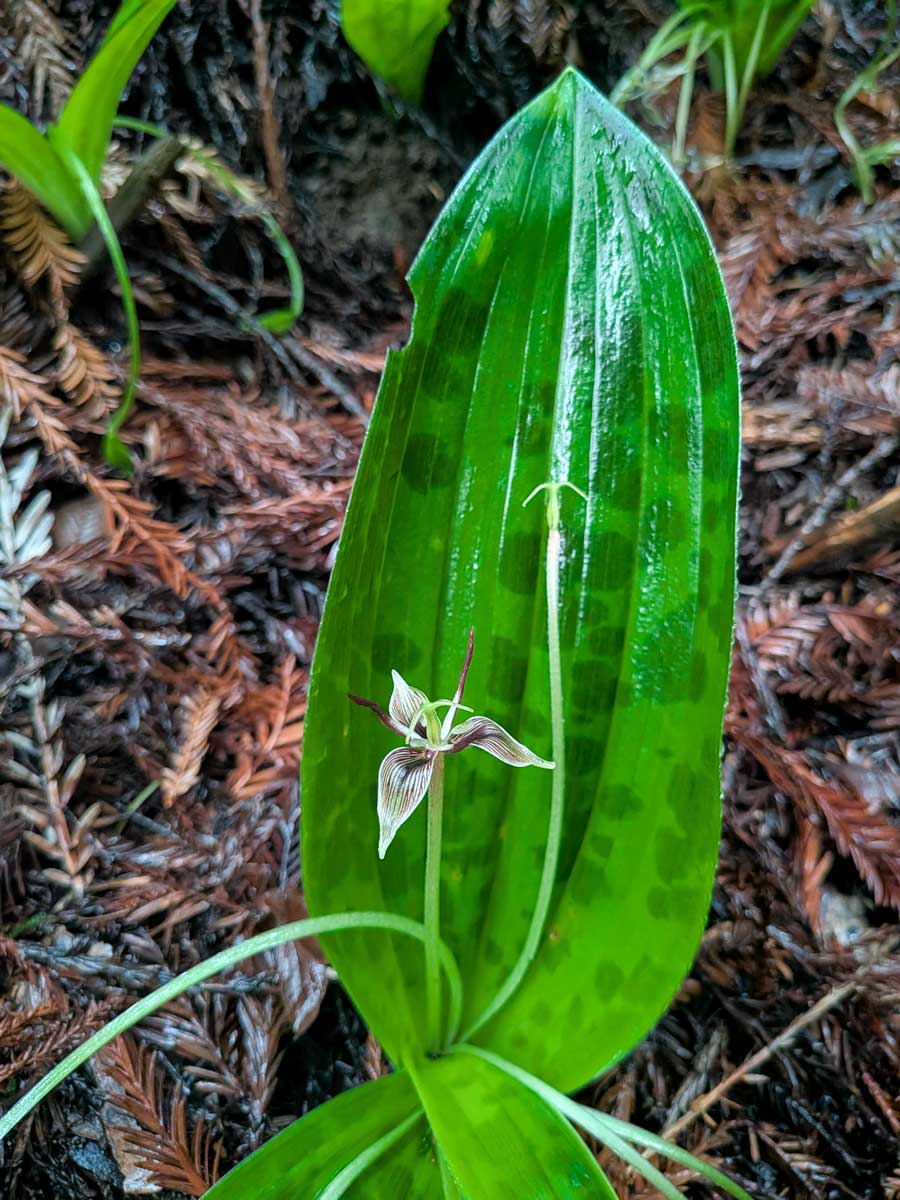
The California fetid adderstongue (Scoliopus bigelovii) is small and easily overlooked in the shaded understory of redwood forests. Each plant typically produces a pair of broad leaves, although some may have several. The leaves are mottled with irregular patterns of green and brown, helping them blend into the surrounding leaf litter.
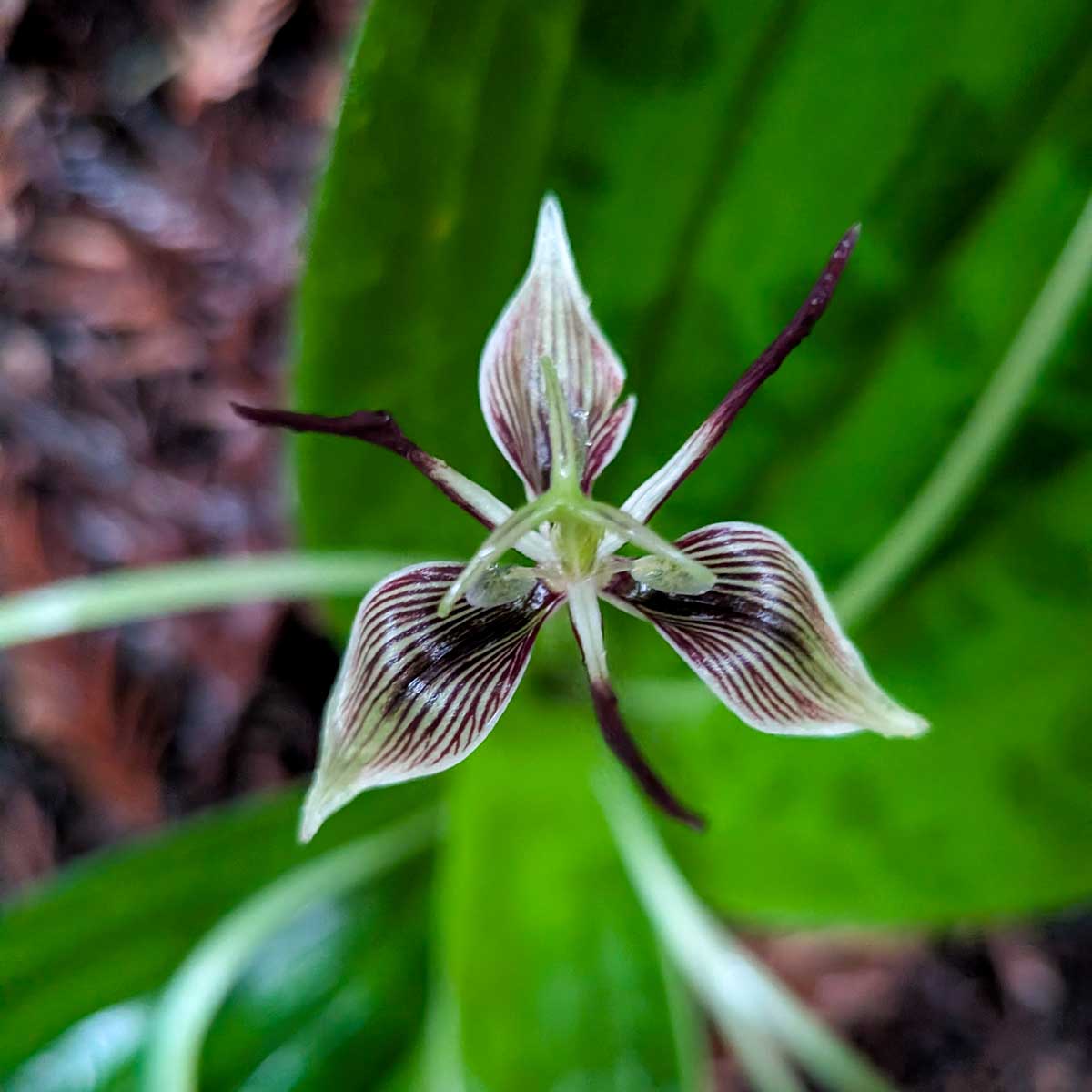
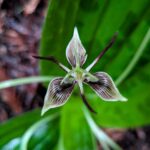
From the middle of the leaves rise short stems topped with single flowers. Each flower has narrow, spreading petals marked with dark maroon and green striping.
A brief seasonal window
The flowers appear in late winter and last only a few weeks. By late spring, the aboveground parts die back, and the plant remains dormant underground until the next rainy season.
Pollinated by gnats
Instead of relying on bees or butterflies, the fetid adderstongue uses scent to attract fungus gnats. These tiny flies are commonly found in damp environments where fungi and decaying plant material are present.
The flower produces a musty, slightly rotten odor and has dark striping that visually mimics fungal surfaces. Fungus gnats drawn to the flower pick up pollen as they move between plants, allowing pollination to occur. This specialized relationship helps the plant reproduce in the cool, shaded conditions of the redwood forest.
Using ants to spread seeds
After flowering, the California fetid adderstongue relies on ants to help spread its seeds. This process, known as myrmecochory (seed dispersal by ants), is common among some forest understory plants.
Each seed has a small attached structure called an elaiosome. An elaiosome is a fleshy, nutrient-rich appendage that contains fats and proteins attractive to ants. Worker ants carry the seeds back to their nests, where they remove and consume the elaiosome, and leave behind the seed to germinate.