Cooler temperatures, shorter days, and seasonal rain bring changes across the Santa Cruz Mountain landscape. Trails become quieter as birds shift away from their spring and summer singing activity. The golden hue of hillsides shifts to green as grass, fed by the winter rains, starts to sprout. Winter offers hikers a chance to notice changes in the landscape that are less visible during other seasons.
Winter fog along the trails
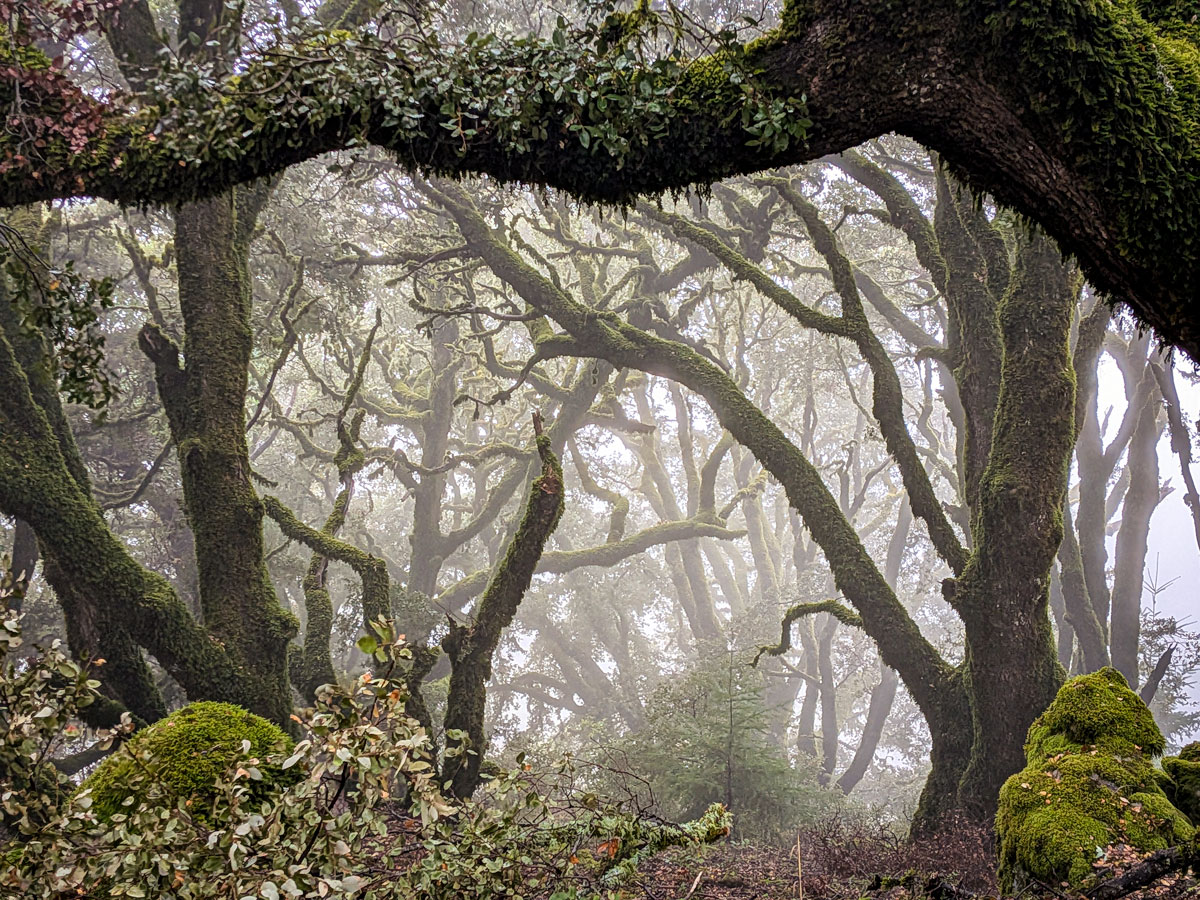
Winter often brings more frequent fog, especially during and after overnight cooling. Moist marine air can move inland through the gaps in the coastal hills, settling into canyons and hovering along ridge trails.

Fog influences temperature and moisture near the ground, helping keep soils damp and supporting the growth of moss, lichens, and fungi. It can also change visibility quickly, so hikers may notice shifts in sound and light as they move through pockets of dense mist.
Winter color and seasonal berries
Even though many plants go dormant, the hillsides still offer seasonal color. California fuchsia (Epilobium canum), better known for its late-summer blooming period, may hold on to some last flowers in sheltered spots. The brightest winter pop of color is toyon (Heteromeles arbutifolia). This shrub produces clusters of bright red berries that serve as a seasonal reminder that winter is here.

Toyon berries are more than trail-side decoration. They are an important winter food source for several species, including American robins, cedar waxwings, northern flickers, and mammals such as coyotes and foxes. Because other fruits are scarce at this time of year, toyon helps sustain wildlife until spring.
Mushrooms and fungus
Once the rains return, fungi begin to fruit. Winter is one of the best times to look for mushrooms in the Santa Cruz Mountains because moisture activates the network of mycelium beneath the soil and leaf litter.

Along damp winter trails, hikers may notice mushrooms including turkey tail, oyster mushrooms, waxcaps, and inkcaps.
California newts on the move
California newts (Taricha torosa) are a common sight on damp winter trails. They are endemic to California, meaning they naturally occur only within the state. When winter rains arrive, adults leave their upland summer habitat and travel to ponds and slow streams to breed. This migration often brings them across footpaths and fire roads.

Newts move slowly and are difficult to see against wet soil and leaf litter, so stepping carefully can prevent accidental harm. They also produce tetrodotoxin, a potent neurotoxin used as a defense. For this reason, they should not be handled.
Banana slugs in higher numbers
Moisture also brings out banana slugs, one of the region’s most recognizable invertebrates. During dry months, banana slugs seek refuge under logs and in shaded crevices to avoid desiccation. Winter rains allow them to forage more freely for decaying vegetation, fungi, and other organic matter. Their increased surface activity makes them easier to spot along trail edges and under redwood canopy.

Deer winter behavior and herd segregation
Columbian black-tailed deer, the local subspecies of mule deer, often travel in gender-specific groups during winter.

Female deer and their offspring form matrilineal groups, while males tend to gather in small bachelor herds after the autumn rut ends. This separation reflects differences in energy needs and behavior: females focus on conserving fat reserves for late-winter and spring fawning, while males recover from the energetic cost of the rut and reestablish loose social groups.
Bare branches and deciduous plants
Winter also reveals the structure of many native deciduous species. Bigleaf maple, California buckeye, and valley oak all lose their leaves during the cold season. Without foliage, their branching patterns are easier to study, and lichen and moss growing along trunks become more visible.
In winter, California buckeye trees hold their large, chestnut-like seed pods on bare branches, making them easy to spot along the trail. California buckeye and true chestnut trees are not closely related, even though their seeds look similar. California buckeye is in the genus Aesculus, while true chestnuts such as American, European, or Chinese chestnut are in the genus Castanea. The similarity in their seeds is superficial. Chestnuts develop inside a spiny husk and are edible, while buckeye seeds are smooth, shiny, and toxic if eaten.

Poison oak deserves special attention. Hikers should be aware that “leaves of three, let them be” doesn’t apply for identifying poison oak in the winter. It is also deciduous, which means the leaves drop and only smooth, bare stems remain in winter.
These stems still contain urushiol, the oil responsible for skin irritation. Even when dormant, the plant can cause a reaction on contact so make sure you avoid brushing against smooth, bare stems while out hiking.
Winter migrant birds
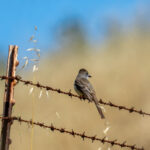
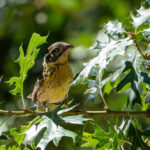
The Santa Cruz Mountains host several migratory birds that winter in the region. Yellow-rumped warblers are especially widespread at this time of year, using their ability to digest waxy berries to take advantage of food sources unavailable to many other species. White-crowned sparrows, golden-crowned sparrows, and varied thrushes also appear in greater numbers as they move down from northern or higher-elevation breeding grounds.

Mixed-species foraging flocks—groups of different songbirds moving together—are another winter feature. These flocks often include chestnut-backed chickadees, titmice, nuthatches, and small woodpeckers. Watching them move through the canopy can give hikers a sense of the forest’s food availability and structure.
Other winter changes worth noticing
Several additional signs are common this time of year:
- Increased lichen growth supported by consistent moisture
- Seasonal creeks beginning to flow
- Redwood sorrel and other understory plants responding to damp soil
- Animal tracks made clearer in soft ground after rain

Winter hiking
Winter hiking in the Santa Cruz Mountains offers quieter trails and a chance to observe seasonal patterns that are less visible in summer.